Just as Washington says the Iran war is “weeks, not months” from wrapping up, Iran’s most disruptive proxy has opened a fresh front that can hit your wallet through energy and shipping shocks.
Quick Take
- Yemen’s Houthis announced they have entered the Iran war by firing ballistic missiles toward southern Israel on March 28, triggering air raid sirens in Beersheba.
- The conflict began after U.S.-Israeli surprise strikes on Iran on Feb. 28 that reportedly killed Supreme Leader Ali Khamenei, with indirect U.S.-Iran talks continuing without a breakthrough.
- Analysts warn Houthi involvement can pressure U.S. and Israeli air defenses while threatening Red Sea shipping lanes near Bab al-Mandab, a critical choke point for global trade and energy.
- Houthi capacity may be constrained by stockpiles and resupply limits, but even intermittent attacks can raise shipping costs and oil prices.
Houthis Expand the Battlefield as U.S. Leaders Signal a Near-Endgame
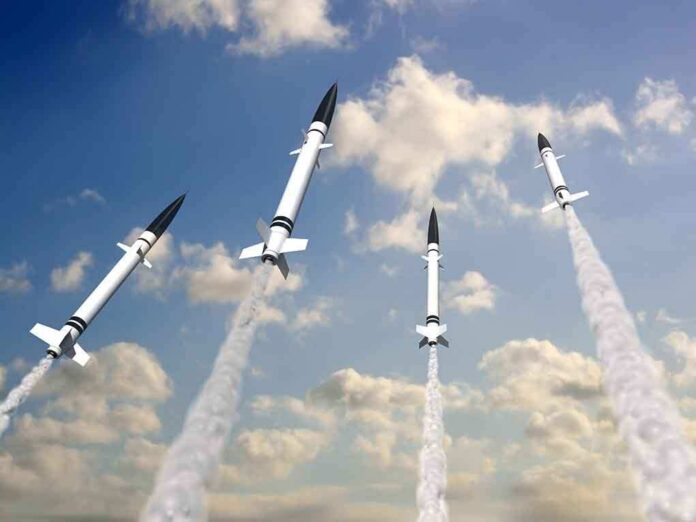
Houthi officials said the group entered the war on March 28 by launching a barrage of ballistic missiles aimed at “sensitive Israeli military sites,” a move that set off sirens in southern Israel. The strike came in the war’s fifth week, at the same time President Donald Trump and Secretary of State Marco Rubio publicly projected a faster-than-expected finish. That timing matters because it tests whether “weeks” is realistic once new actors start firing.
The current war traces back to Feb. 28, when the U.S. and Israel launched surprise airstrikes on Iran that reportedly killed Supreme Leader Ali Khamenei and triggered broader regional escalation. Since then, the conflict has spilled across the Middle East, with armed groups and states navigating how directly to engage. Even with indirect U.S.-Iran contacts continuing, reporting indicates no diplomatic breakthrough has materialized that would reliably prevent additional fronts from igniting.
Why Yemen’s West Coast Matters: Bab al-Mandab, the Red Sea, and Energy Prices
Houthi geography gives the group leverage beyond headline missile barrages. The Houthis control parts of Yemen’s west coast along the Red Sea, near the Bab al-Mandab Strait, a major chokepoint for global shipping. Analysts emphasize that Houthi activity can drive disruptions that outsize their resources by forcing reroutes, increasing insurance costs, and delaying deliveries. In practical terms, that can translate into higher energy and goods prices at home.
Expert analysis frames the Houthis as a “force multiplier” for Iran, not because they can match U.S. power, but because they can impose costs where the West is economically vulnerable. Think tanks have warned that renewed pressure on tankers and commercial shipping can ripple through the global economy. The short-term effect can be depleted missile-defense stocks and higher shipping expenses; the longer-term risk is sustained instability across Red Sea and Gulf routes that keeps markets jumpy.
Iran’s Proxy Network Is Not a Single Puppet String
Reporting and analysis also complicate the popular assumption that every proxy move is micromanaged from Tehran. Analysts describe the Houthis as among the least controllable of Iran-aligned groups, with their own incentives and internal politics. At the same time, Iran has supplied missile technology for years, and Iran’s new Supreme Leader, Ayatollah Mojtaba Khamenei, has signaled interest in opening “new fronts.” Both can be true: alignment without perfect command.
Constraints and Unknowns: Stockpiles, Resupply, and the Risk of a Longer War
One limiting factor is capability. Analysis notes Houthi stockpiles were previously depleted after attacks during the Israel–Hamas period, and resupply from Iran may be challenging. Some experts suggest Iran’s IRGC may discourage “suicidal” escalation to preserve options after major battlefield shifts. That said, limited inventories do not eliminate risk: a few successful strikes, or even credible threats, can force expensive defensive postures and keep commercial shipping on edge.
For American conservatives who are tired of blank-check foreign entanglements, the strategic dilemma is obvious in the public record: U.S. officials speak in timelines while the battlefield keeps adding moving parts. The Constitution gives Congress war powers for a reason, and the public deserves clarity on objectives, duration, and costs when new fronts open. Without clear endpoints, disruptions in energy and trade can become the “hidden tax” that hits families hardest.
GOOD!! Now we have a reason to destroy the Houthis.
The Houthis Have Entered the Iran War – Here's What That Could Mean https://t.co/GXp2VZyXHo
— divide_by_zero 🇺🇸 (@Dee_Bee_Zee_) March 29, 2026
The immediate takeaway is not that one missile barrage guarantees a wider war, but that escalation pathways are multiplying faster than political messaging can keep up. The Houthis can pressure Israel, threaten shipping, and complicate any push to wind down operations—even if their sustained capacity remains uncertain. With indirect talks still stalled and regional actors watching each other’s moves, the next few weeks will show whether “near the end” was a forecast or a talking point.
Sources:
Yemen’s Houthis Have Entered the Iran War. What You Need To Know
Analysis: What do Houthi attacks on Israel mean for the Iran war