

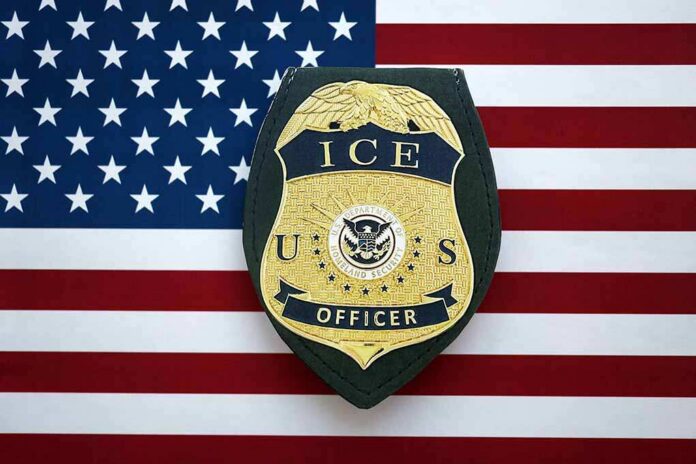
ICE just told the public to pick up the phone and report commercial driver’s license fraud, and they put the Department of Transportation on the banner with them.
Story Snapshot
- Immigration and Customs Enforcement announced a hotline to report commercial driver’s license fraud.
- The agency framed it as a joint push with the Department of Transportation.
- Coverage tied the rollout to recent deadly crashes and an ongoing fraud crackdown.
- ICE already runs a national tip system, which makes a CDL channel feasible.
ICE Puts A Phone Number On CDL Fraud
U.S. Immigration and Customs Enforcement (ICE) said the public can now call in tips on commercial driver’s license fraud. The agency posted the hotline on its official account and said Homeland Security Investigations is working with the Department of Transportation to “crack down on CDL fraud to save American lives”. Trade press and local outlets reported the same move and framed it as part of a larger push on fraudulent licensing across the trucking sector.
The announcement followed months of attention on unsafe drivers, sham training schools, and corrupt testing rings. Reports tied the hotline to cases that involved unqualified or unlawfully licensed drivers and to inspections aimed at pulling them off the road. That link matters because federal partners have stressed that licensing integrity is a safety issue, not just a paperwork fight. The stated goal is simple: stop people who should not be driving 80,000-pound rigs from getting behind the wheel.
Why A Tip Line Fits The Playbook
ICE has long operated public reporting channels. The federal portal points people to an international toll-free Homeland Security Investigations tip line and to an online tip form that accepts anonymous submissions. A CDL-focused call-in sits neatly on top of that intake system. It also gives state motor vehicle departments and trucking employers a place to send concerns that may cross state lines or involve immigration, identity, or document fraud beyond a single jurisdiction.
Other federal offices run hotlines for specific fraud risks as well, from agency inspectors general to transportation watchdogs. Those programs exist because tips often surface schemes that audits miss. The catch is that hotlines work best when agencies triage reports fast and share leads to the right partners. That is where a joint ICE–Department of Transportation posture can shorten the path from a phone call to an inspection, a license action, or a criminal case.
The Broader Crackdown Context
The Department of Homeland Security announced in July that Homeland Security Investigations would work with the Department of Transportation’s Federal Motor Carrier Safety Administration to target fraud in the issuance of commercial licenses to illegal aliens. The Department of Transportation has also highlighted sweeping actions to clean up the training and licensing pipeline, including removals of drivers, cancellations of licenses that states issued improperly, and large-scale purges of unqualified training schools from the federal registry. Those efforts set the stage for a public tip channel aimed at the same risks.
ICE Launches Tipline for Reporting Commercial Driver’s License (CDL) Fraudhttps://t.co/abiD0f6Ry4
— White House Press Office (@PressSec) September 9, 2026
Readers should see the through line. Agencies built a lane for tips. Agencies staffed that lane with investigators who can work across borders. Transportation regulators tightened the gate at schools and license desks. Now the public has a number to call when they see a sham test, a corrupt examiner, or a driver who cheated the system. That sequence tracks with past federal enforcement drives that blend regulation, field checks, and citizen reporting.
What This Means On The Road
Truckers, safety managers, and state officials now have a focused way to flag suspected CDL fraud. Expect more targeted audits of training providers, sharper background checks on license transfers, and faster referrals from federal agents to state departments of motor vehicles. Employers who depend on clean files should welcome that pressure. Americans who share the road with heavy trucks should as well. Removing unqualified drivers protects honest drivers and the families they pass at 65 miles per hour.
Conservatives will see another upside: a basic standard of fairness. If someone lies to win a license, or gets help to beat the test, they put others at risk and undercut every driver who did it right. A tip line is not government theater when it feeds real cases to real cops. It is a simple tool to defend the rule of law and the value of a hard-earned credential. Use it if you see something that does not add up.
Sources:
nypost.com, wfmd.com, x.com, overdriveonline.com, oig.dhs.gov, dhs.gov, oig.hhs.gov
© conservativefreepress.com 2026. All rights reserved.