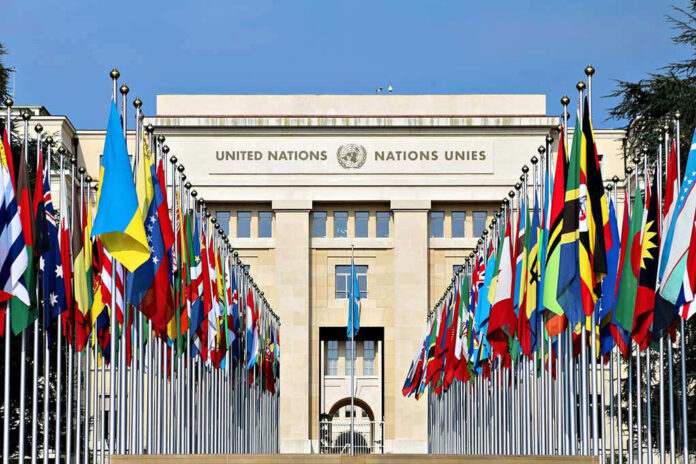
A United Nations report exposes the global surrogacy industry as a modern form of “slavery,” sparking renewed calls for a total ban—and raising serious alarms about the erosion of human rights and family values under the guise of “consent.”
Story Snapshot
- UN Special Rapporteur report warns that consent does not justify surrogacy’s exploitation of women and children.
- Industry projected to reach $129 billion by 2032, driven by cross-border demand and weak regulation.
- Human rights organizations and experts demand bans or strict reforms to protect vulnerable mothers and children.
- Power imbalances and economic desperation fuel systemic abuses in surrogacy markets worldwide.
UN Report Demands Global Action on Surrogacy Exploitation
The newly released United Nations Special Rapporteur report has ignited controversy by labeling the international surrogacy industry as a form of modern “slavery.” The report, finalized in May 2025 after months of advocacy and global debate, asserts that no amount of contractual consent can legitimize arrangements that systematically exploit poor women and commodify children. According to first-hand accounts and case studies, surrogacy agencies and clinics often target vulnerable populations in nations with weak legal protections, fueling a multibillion-dollar enterprise built on desperation and powerlessness.
Commercial surrogacy’s explosive growth—now valued at over $14 billion and projected to soar to $129 billion within a decade—has been enabled by regulatory gaps and vast economic disparities. Countries such as Georgia, Kenya, and Cambodia have become hotbeds for “rent-a-womb” arrangements, attracting foreign clients eager to bypass stricter laws at home. The UN report highlights recurring abuses, including unlicensed clinics in Mexico, trafficking networks in Greece, and the criminalization of surrogates in Cambodia that only deepens women’s vulnerability. Despite promises of life-changing compensation, most surrogate mothers see little lasting benefit and bear the greatest risks, including health complications and loss of autonomy over their bodies and children.
Systemic Power Imbalances and Human Rights Violations
At the heart of the UN’s critique is the claim that global surrogacy markets operate on deep-seated power imbalances. Surrogate mothers, often from the poorest and least educated communities, are recruited by profit-driven agencies and intermediaries who control both information and resources. The resulting lack of bargaining power means true, informed consent is nearly impossible—rendering the process ripe for exploitation. Human rights organizations warn that these practices amount to commodification of women and children and that the industry’s cross-border nature makes oversight nearly impossible. Scandals in places like Tabasco, Mexico, and Greece have revealed women kept in captive conditions, forced to relinquish their babies, and subjected to health risks without adequate care or legal recourse.
Legal scholars and bioethicists quoted in the report emphasize that simply obtaining a signature or payment does not erase the core reality: many surrogates are driven by economic need, not genuine choice. The UN report calls out the “systemic exploitation” at play and urges governments to adopt bans or rigorous restrictions on commercial surrogacy. While some advocates propose regulated, non-commercial surrogacy as a possible alternative, the prevailing expert consensus is that the current industry structure cannot be reconciled with basic human rights and family values.
Ongoing Debate and Conservative Concerns
Policy responses to the surrogacy industry’s abuses remain sharply divided. In regions where surrogacy is legal but regulated, reforms have aimed to ban intermediaries or tighten eligibility, but enforcement remains weak and black markets persist. Other countries have opted for outright bans, which, according to some legal experts, can drive the practice underground and create even greater risks for women and children. The report’s release has galvanized human rights groups, family advocates, and lawmakers who argue that the industry violates the most fundamental protections—threatening the sanctity of motherhood, the integrity of the family, and the dignity of human life itself.
For American conservatives, the UN’s findings reinforce longstanding concerns about the dangers of globalism, unchecked markets, and policies that treat human life as a commodity. As the debate intensifies, the core message is clear: true consent cannot exist where desperation and coercion reign. Protecting the vulnerable from exploitation requires more than new regulations—it demands a principled stand for family values, constitutional rights, and the basic decency that defines a just society.
United Nations Report: ‘Slavery’-Like Rent-A-Womb Industry Should Be Globally Banned https://t.co/xzlwejqC4e
— C4 (@C4RECKONING) August 28, 2025
As international bodies and national governments consider next steps, the pressure grows for the U.S. and its allies to take decisive action. Without strong conservative leadership, America risks following the same path of moral compromise that has enabled these abuses abroad. The time to defend the voiceless and reassert the value of every human life is now.
Sources:
WYA Submits Report on Surrogacy to UN Special Rapporteur
Commercial Surrogacy Between Ethics and Legalization
SRVAWG Surrogacy Joint Submission
Call for Input: Thematic Report of the Special Rapporteur on Violence Against Women and Girls