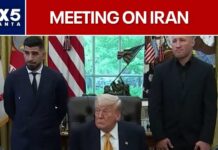
As President Trump orders troops paid during a Democrat-driven shutdown, Americans witness a test of executive power and a reminder of what’s at stake when constitutional responsibilities are neglected.
Story Snapshot
- Trump directs Secretary of Defense to pay active-duty military during ongoing government shutdown, bypassing Congress.
- Democrats blamed for funding impasse, accused of holding military families “hostage” to partisan demands.
- Move highlights use of executive authority to counteract legislative gridlock and protect national security.
- Legal and financial sustainability of redirected funds remains uncertain, raising constitutional questions.
Trump Acts to Protect Troops Amid Shutdown Standoff
On October 11, 2025, President Donald Trump announced that he had instructed Secretary of Defense Pete Hegseth to utilize “all available funds” to ensure military personnel would receive their pay on October 15, despite the ongoing government shutdown. This directive comes as Congress remains deadlocked, failing to pass necessary appropriations to fund federal agencies, with Democrats and Republicans locked in a bitter dispute over budget priorities. Trump’s action seeks to shield military families from financial hardship caused by Washington’s dysfunction, a move that resonates strongly with Americans concerned about national security and respect for those who serve.
The President’s decision follows a series of escalating statements, including a public assurance at a Navy event on October 9 that service members would not miss paychecks. Trump’s directive, announced on social media, positions him firmly as the defender of the troops and accuses congressional Democrats of endangering both national security and the well-being of military families. The White House revealed that funds would be redirected from research and development accounts, though officials provided limited details about the amount or the long-term viability of this approach. This lack of transparency raises questions about both the legality and sustainability of the solution if the shutdown drags on, but it underscores Trump’s willingness to act decisively where Congress has failed.
Democrats Accused of Holding Military Hostage
Throughout the shutdown, Trump and Republican leaders have maintained that Democrats are “holding the military hostage” by refusing to pass a continuing resolution or targeted funding bills for the Department of Defense. Speaker of the House Mike Johnson and Secretary Hegseth both echoed Trump’s sentiments, urging immediate passage of a funding measure to guarantee military pay. Despite these calls, Democrats have resisted piecemeal solutions, advocating for broader negotiations on spending priorities—a stance that, in effect, prolongs the uncertainty for active-duty military and their families. This political brinkmanship has serious consequences for morale and financial security within the armed forces, igniting outrage among Americans who expect their leaders to prioritize those who defend the country.
Government shutdowns are not new, but the stakes have rarely been higher. The military, one of America’s most respected institutions, is again at the center of a partisan battle. The current shutdown began on October 1, and by October 10, federal employees—including many in the Department of Defense—saw their paychecks reduced or delayed. Previous shutdowns saw Congress pass special measures to protect troop pay, but in 2025, no such legislation was in place at the outset, increasing pressure on the executive branch to find an immediate solution. Trump’s use of executive authority sets a new precedent, demonstrating both the power and limits of the presidency in responding to legislative gridlock.
Legal, Financial, and Constitutional Uncertainties
While Trump’s directive provides short-term relief for military families, it opens a new front in the debate over the separation of powers and the constitutional “power of the purse.” Defense experts, legal scholars, and budget analysts have voiced concerns about the legality of reallocating research and development funds for payroll purposes, warning that such actions could violate the Antideficiency Act and undermine established appropriations processes. The White House has yet to clarify the total amount redirected or how long such a strategy could be sustained if the shutdown continues. These uncertainties highlight the broader risks of relying on executive action in a system designed to require legislative cooperation and transparency.
Critics argue that the move, while necessary to support the troops, may erode congressional authority and set a troubling precedent for future administrations. Supporters counter that Trump’s decisive action was needed to protect those who serve, especially in the face of partisan obstruction. Public debate continues to intensify, with military families caught in the crossfire and Americans left questioning why the basic function of funding national defense has become a political bargaining chip.
Expert Perspectives and the Road Ahead
Industry analysts and legal experts remain divided on the long-term implications of Trump’s intervention. Some warn that repeated executive workarounds could destabilize budget planning for the Department of Defense and invite litigation over constitutional boundaries. Others emphasize the necessity of prioritizing troop welfare over bureaucratic process, especially when legislative gridlock threatens core national interests. As of October 12, the mechanism to ensure troop pay is in motion, but the underlying conflict in Congress remains unresolved, leaving open the possibility of renewed crisis if the shutdown continues. The episode serves as a stark reminder of the importance of constitutional checks and balances—and the real-world costs when they break down.
Trump Attacks Dems As He Promises To ‘PAY OUR TROOPS’ This Week https://t.co/EVzIHtHXlG
— Mediaite (@Mediaite) October 11, 2025
For many Americans, the current standoff is not just a policy dispute but a test of values: whether the government will fulfill its duty to those who serve, or allow partisan gamesmanship to undermine the nation’s security and the livelihoods of military families. As the shutdown enters its third week, pressure mounts on Congress to restore its constitutional role and end the impasse. Until then, the President’s actions remain both a shield for the troops and a spotlight on the deeper dysfunction in Washington.
Sources:
Trump says Pentagon has identified funds to pay military during shutdown
Trump Says He Plans to Pay US Troops on Oct. 15 Despite Shutdown
President Trump funds military pay despite shutdown
Trump says troops paid despite shutdown