

An 86-year-old sailor and his dog were found alive 460 miles off California after two silent months, thanks to a swift Coast Guard alert and a merchant ship crew that refused to quit.
Story Highlights
- Coast Guard aircraft located the disabled sailboat Willow Wind about 460 miles off San Diego
- Merchant ship Grand Orion recovered the sailor and dog after rough seas delayed the first try
- A Coast Guard helicopter later hoisted both from the freighter about 170 miles west of Ventura
- The voyage began in Oregon with plans for American Samoa before contact stopped in late August
Rescue Begins With Aircraft Spotting Far Offshore
U.S. Coast Guard crews launched a search after an emergency beacon alert tied to the sailboat Willow Wind. A C-27 Spartan aircrew from Air Station Sacramento located the vessel about 460 miles off San Diego and confirmed an elderly mariner and a dog were aboard and alive. That sighting set in motion a coordinated response that used aircraft, a nearby commercial ship, and a later helicopter transfer to move the pair toward the coast safely.
Reports say the sailor had left Astoria, Oregon, bound for Pago Pago in American Samoa. Family or contacts last heard from him on August 20. Authorities received an overdue-vessel report on October 24, which preceded the emergency-beacon hit several days later. That timeline gave rescuers a search area and reason to treat the case as urgent due to age, distance, and offshore weather risks.
Merchant Mariners Execute The Critical Pickup
Coast Guard controllers diverted the commercial vessel Grand Orion to the scene after the aircraft confirmed the location. The crew of the Grand Orion reached the sailboat at about 3:20 a.m. but could not safely transfer the sailor and dog due to rough seas. Hours later, with better conditions, the crew completed the recovery at about 5:36 p.m., bringing both aboard the ship and beginning the trip toward the coast under safer conditions.
Rescuers described the sailboat as damaged or disabled, with reports of compromised sails and limited ability to maneuver. That made direct towing or an immediate transfer risky in the dark and in heavy seas. The Grand Orion’s patient approach, guided by Coast Guard coordination, showed how commercial mariners often serve as first responders far from shore, bridging the gap until a helicopter can reach the scene.
Helicopter Hoist Brings The Pair Toward San Diego
A U.S. Coast Guard MH-60 Jayhawk helicopter crew from Air Station San Diego met the Grand Orion when it was about 170 miles west of Ventura, California. Rescue swimmers hoisted the sailor and his dog from the ship’s deck and flew them toward San Diego for medical checks. Outlets reported the sailor was weak but stable, and both were evaluated after landing. Officials have not released a detailed condition report or an on-record statement from the sailor.
Multiple reports match on the core facts: the distant location, the aircraft detection, the commercial-ship transfer, and the final helicopter hoist. The consistent sequence across outlets underscores a common rescue model offshore: beacon alert, aircraft locate, merchant pickup, and helicopter evacuation when within range. That layered approach saved time and likely saved two lives in a harsh stretch of the Pacific.
Why The System Worked: Beacons, Training, And Teamwork
Emergency beacons and overdue-vessel reporting built the foundation for this save. Coast Guard policy treats search and rescue as a standing mission supported by watch standers, pilots, boat crews, and cutters. In fiscal year 2025, the Coast Guard recorded 6,705 search-and-rescue cases and 2,242 lives saved, showing how routine readiness turns into real outcomes for families in crisis.
An 86-year-old sailor and his dog have been rescued after a multi-day search in the Pacific Ocean.
The sailing vessel Willow Wind had been reported overdue while travelling from Astoria, Oregon, to Pago Pago, American Samoa. After its emergency beacon activated, a U.S. Coast… pic.twitter.com/WrYgwLBF0a— Unconnected Dot (@Unconnected_Dot) November 3, 2026
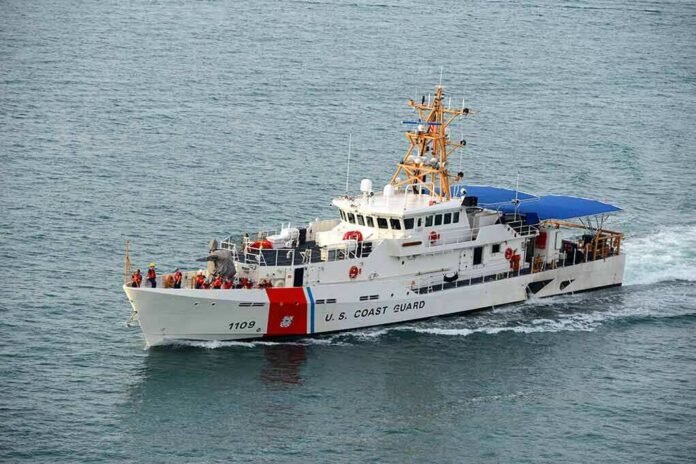
The Coast Guard’s small boats, cutters, and aircraft share the load with commercial mariners who answer calls far from shore. In fiscal year 2023, Coast Guard boats handled more than half of the service’s search-and-rescue missions and accounted for nearly two-thirds of lives saved. This case fits that pattern: find the mariner, leverage the nearest ship, and bring a helicopter when distance and fuel allow a safe hoist.
What Conservatives Should Know About Preparedness
This rescue is a win for common sense, personal responsibility, and strong national readiness. A working beacon, a filed route, and a family that reported him overdue gave rescuers a track to follow. Coast Guard crews and a merchant ship did the rest. That is what a focused government mission should look like: clear roles, trained people, and fast action that saves lives without red tape or grandstanding.
Sources:
foxnews.com, people.com, latitude38.com, okmagazine.com, thedailybeast.com
© conservativefreepress.com 2026. All rights reserved.