Vigilant police work stopped a detailed mass shooting plot targeting a university campus before it could unfold, exposing a dangerous gap in threat detection that should alarm every American concerned about campus safety and national security.
Story Snapshot
- A 25-year-old Pakistani-born former University of Delaware student was arrested with multiple firearms, body armor, and a handwritten manifesto detailing plans to attack campus police
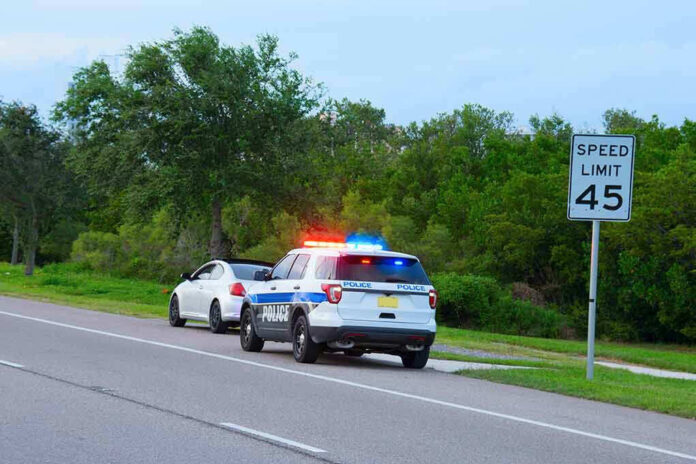
- The arrest stemmed from a routine traffic stop on November 24, 2025, when officers observed suspicious behavior and conducted thorough police work rather than simply dismissing the situation
- Khan stated that becoming a martyr was “one of the greatest things you can do,” suggesting ideological extremism as motivation for the alleged plot
- The suspect had no prior criminal record, demonstrating how radicalized individuals can evade detection until law enforcement vigilance catches them
- Federal prosecutors are pursuing additional charges as the investigation continues, with Khan facing up to 10 years for the current charge of illegal machine gun possession
Routine Police Work Prevents Campus Tragedy
On November 24, 2025, New Castle County Police officers spotted Luqmaan Khan’s Toyota Tacoma parked in Canby Park in Wilmington and became suspicious of his behavior. Rather than dismissing the situation, officers conducted thorough police work that uncovered a cache of weapons, body armor, extended magazines, and detailed planning materials inside the vehicle. This intervention prevented what law enforcement describes as a potentially devastating attack on the University of Delaware Police Department.
Detailed Plot Reveals Premeditation and Extremist Ideology
Khan possessed multiple firearms and a handwritten manifesto outlining specific plans for a mass shooting on campus. During FBI questioning following his arrest, Khan acknowledged owning the weapons and stated that becoming a martyr was “one of the greatest things you can do.” This statement reveals ideological or religious extremism driving the alleged plot. A federal judge approved search warrants for Khan’s South Van Buren Street residence in Wilmington, where investigators discovered additional weapons and ammunition, further demonstrating the scope of his preparation.
No Prior Warning Signs—A Vulnerability in Threat Detection
Khan had no prior criminal record, making him an invisible threat under conventional threat assessment frameworks. The 25-year-old Pakistani-born individual, who immigrated to the United States as a boy and holds U.S. citizenship, was a former undergraduate student at the University of Delaware. The absence of a criminal history meant standard background checks would have revealed nothing. This case underscores a critical vulnerability: radicalized individuals can develop violent intentions without triggering existing law enforcement detection systems until they take concrete action.
Federal-State Collaboration Yields Results
Master Corporal Richard Chambers of the New Castle County Police Department emphasized the importance of thorough police work, noting that officers “rather than just shooing the person out, they did police work.” Acting U.S. Attorney Julianne Murray characterized the case as “a quintessential example of federal and state law enforcement collaborating to neutralize a grave threat to Delaware before the worst could come to pass.” Khan now faces federal charges for illegal possession of an unregistered machine gun, carrying a maximum 10-year prison sentence, with prosecutors indicating additional charges remain possible as the investigation continues.
Campus Security and National Implications
This arrest raises urgent questions about campus security protocols nationwide. Universities must balance maintaining open environments with implementing threat assessment procedures that identify radicalized individuals before they act. The case demonstrates that threats can emerge from students without obvious warning signs, requiring enhanced vigilance from law enforcement and campus security personnel. The collaboration between local police and federal authorities in this case offers a model for other institutions seeking to strengthen campus safety measures and counter-terrorism capabilities.
Sources:
Pak-Born US Man Arrested With Guns, Martyrdom Mass Shooting Plan
Traffic Stop Foils Alleged Terror Attack Plot Against UD Police