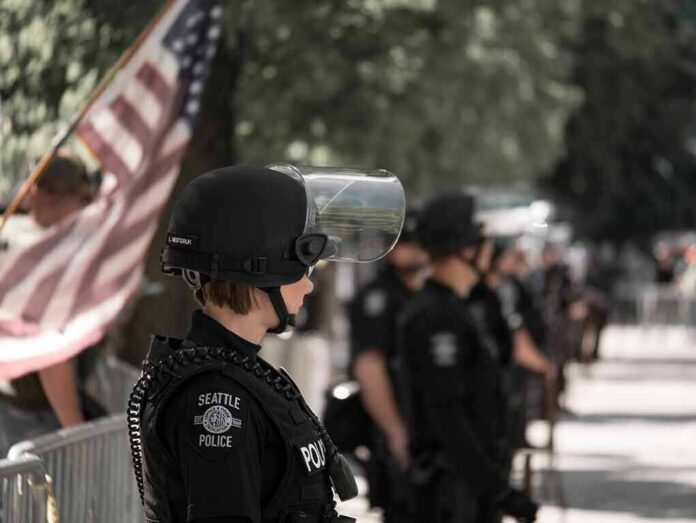
In Washington, recalls are not referendums on frustration; they are legal instruments that succeed only when voters can prove concrete misfeasance. That single distinction explains both the intensity of Seattle’s debate over Mayor Katie Wilson’s public-safety record and the steep odds facing the residents now trying to remove her midterm.
The Short Version
- Washington recall law demands specific, provable misconduct; dissatisfaction with policy or performance rarely qualifies.
- The petition against Mayor Wilson centers on alleged dereliction of public-safety duties and will first face a legal sufficiency hearing in King County Superior Court.
- Backers cite neighborhood crime, the Bite of Seattle shooting fallout, and Wilson’s pause on CCTV expansion as failings; Wilson cites privacy safeguards and an ongoing audit.
- Historically, successful recalls of Seattle mayors are exceptionally rare; most attempts fail at the legal screen or at the ballot.
What qualifies as a recall in Washington, and why that matters
Washington’s constitution allows voters to recall nonjudicial elected officials for malfeasance, misfeasance, or violation of the oath of office. Those words carry technical meaning: petitioners must allege detailed facts that, if true, make a prima facie case of unlawful conduct or dereliction of a clear legal duty—not mere disagreement over priorities or unpopular choices. Courts conduct a gatekeeping function, testing both factual sufficiency (are the alleged facts concrete and supported by some demonstrable knowledge?) and legal sufficiency (do those facts, on their face, amount to recallable misconduct under law?) before signature gathering can even begin. This framework routinely stops recall efforts that are animated by public anger but not tethered to provable breaches.
That screening is not theoretical. In recent years, high-profile petitions—such as attempts aimed at city executives during periods of protest and pandemic response—were narrowed or dismissed by the Washington Supreme Court when the charges did not meet statutory standards, underscoring the gulf between political dissatisfaction and recallable wrongdoing.
The charges against Mayor Wilson and the road to a ballot
The recall proponents, Seattle residents Melinda Jacobson and Dale Osterud, accuse Mayor Wilson of being “derelict in her duties for the public safety of the City of Seattle,” a charge set to receive its first legal test at a King County Superior Court hearing. The court’s task is limited but pivotal: decide whether the written allegations, accepted as true for this stage, would constitute misfeasance, malfeasance, or an oath violation if ultimately proven. If the judge allows the case forward, organizers then face a numerical hurdle: gathering roughly a quarter of the votes cast in the last mayoral election—about 70,000 valid signatures—within 180 days to force a special recall vote. Only after that would Seattle voters adjudicate Wilson’s tenure at the ballot box.
Petitioners root their case in on-the-ground grievances. They cite unresolved disorder along the North Aurora corridor, persistent public-safety and drug-market complaints in the Chinatown International District, and the churn of crime concerns from Belltown and Third Avenue. They also fold in process criticisms after the Bite of Seattle mass shooting and, especially, Wilson’s handling of surveillance technology policy: pausing expansion of the city’s CCTV program pending a privacy and data-security review. The theory of the petition is straightforward—these actions and inactions, taken together, amount to a breach of the mayor’s public-safety duty—but whether that converts to legally recallable misconduct is exactly what Washington’s recall regime tests.
Wilson’s defense: process, priorities, and the surveillance pause
Mayor Wilson has not mounted a granular rebuttal of each charge in public. Instead, she frames the recall as a legal process that will run its course and has emphasized that “safety on our streets is a very, very high priority” for her administration. On the contested surveillance question—where opinion polling shows overwhelming support for camera expansion—Wilson argues that the city should not over-rely on cameras as its primary safety strategy and that expansion was paused pending completion of a privacy, data-security, and governance audit. Her office says a final decision will follow the audit’s results—a sequencing she portrays as due diligence in a field that touches civil liberties, data retention, and inter-agency sharing rules.
This is not a trivial policy disagreement. Real-time camera networks and automated license plate readers can bolster post-incident investigations and, in certain contexts, deterrence; they also raise well-documented risks around mission creep, data misuse, and disparate impact. Wilson’s contention—that governance must be tightened before growth—locates her within a camp that views surveillance tools as supplements to, not substitutes for, policing, environmental design, and focused deterrence. Whether that calibration is wise is a political question; whether the pause violates a legal duty is the recall question.
History and odds: why Seattle recalls so rarely prevail
Seattle’s political culture runs hot, but its recall track record runs cold. Over more than a century, only a handful of mayoral recalls have ever made the ballot, and still fewer have succeeded; the list of failures is longer, including modern efforts that galvanized attention but failed either the legal sufficiency test or the electoral threshold. The structural headwinds are clear: courts demand specificity and a tie to defined legal duties, not broad critiques of leadership; elections officials require large numbers of valid signatures in a limited window; and voters tend to reserve removal for scandals with crisp facts and clear harm.
That history is not absolution for any incumbent, but it is a sober baseline. Petitioners must show more than contested judgment calls about policing posture or technology rollout. They need discrete acts or omissions that the law recognizes as misfeasance, malfeasance, or oath violation—and they must do it in writing, now, before they can ask voters to decide later.
Seattle Mayor Katie Wilson responds to recall efforts | FOX 13 Seattle
The recall path remains uphill under Washington law, but momentum matters. Polls do not remove a mayor, yet they shape donors, unions, and big employers. They also harden media narratives that are tough to…
— JulietteSchwartz (@Juliett59778255) August 24, 2026
Where the real disagreement lies: duty versus discretion
Strip away the rhetoric, and the dispute distills to a hard line-drawing exercise: what counts as a mayor’s non-discretionary duty versus permissible policy discretion in the pursuit of safety. Focused deterrence programs, staffing decisions at the police department, the timing of a surveillance audit—each involves tradeoffs that elected executives are hired to navigate. Washington recall law purposefully protects that zone of discretion; it intervenes only when the line is crossed into unlawful conduct or clear neglect of a statutory duty. In practice, that means evidence that resonates on talk radio or in neighborhood meetings may be insufficient in court without a precise showing of legal breach.
What to watch next
The next determinant is procedural but decisive: the Superior Court’s sufficiency ruling. If it fails, the recall ends. If it clears, the campaign becomes a math problem—organizers must assemble tens of thousands of valid signatures; opponents will cast the petition as a policy quarrel misusing a constitutional remedy. Parallel to the legal calendar, the policy debate will continue: whether to grow surveillance capacity post-audit, how to balance civil liberties with investigatory needs, and whether Seattle adopts a more assertive “carrot and stick” gun-violence strategy championed by some council members. Those choices, more than the recall itself, will shape neighborhood conditions in the near term.
Sources:
komonews.com, justthenews.com, knkx.org, yahoo.com, usatoday.com, thecentersquare.com, fox13seattle.com, seattlemetronews.com, youtube.com, mynorthwest.com, casemine.com, courts.wa.gov, law.uw.edu
© conservativefreepress.com 2026. All rights reserved.