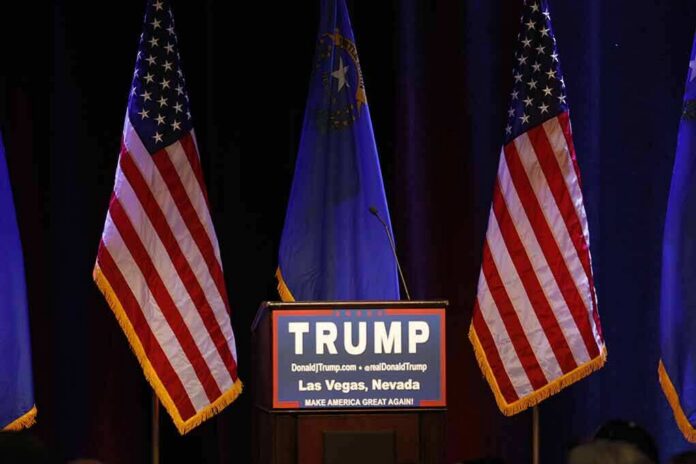
When a newly freed Ross Ulbricht stood before Republican delegates and thanked President Trump for a full, unconditional pardon, he did more than express gratitude; he offered a reframing of a long-running American argument, asserting that liberty and security go together rather than stand in tension. That claim, and the clemency that enabled him to make it on stage, illuminate how modern presidents use pardon power—and how one especially polarizing case became a proxy for deeper fights over justice, politics, and power.
The Short Version
- President Trump granted Ross Ulbricht a full and unconditional pardon, documented in a signed warrant and affirmed in presidential statements.
- Ulbricht publicly thanked Trump in a convention speech and cast the pardon as part of a broader liberty agenda.
- The Ulbricht case sits at the crossroads of clemency’s dual nature: mercy and political instrument.
- A full pardon restores civil status but does not automatically undo forfeitures or return seized assets under modern law.
What Happened: A definitive pardon and a public thank-you
On its face, this story is straightforward. President Trump granted Ross William Ulbricht—a first-time offender convicted in the Southern District of New York in connection with the Silk Road dark-market enterprise—a full and unconditional pardon. The clemency instrument is explicit and formal; the Department of Justice published the signed warrant specifying a “FULL AND UNCONDITIONAL PARDON” for the relevant convictions, sentence, forfeiture, and assessments. The White House message architecture matched the paperwork. Trump publicly stated he had signed the pardon, a claim contemporaneously reported by major outlets tracking the announcement and its aftermath.
Ulbricht, who had served more than 11 years, then re-entered public life. In a recorded video message and in remarks circulated around the Republican convention, he thanked Trump directly, linked his freedom to Trump’s pledge to libertarian audiences the prior year, and argued that the administration’s approach fused civil liberties with public safety rather than setting them at odds. The gratitude is not the newsworthy element; the framing is. By placing liberty and security on the same side of the ledger, Ulbricht tried to convert a contentious pardon into a teachable moment about the uses—and alleged abuses—of state power.
How Presidential Clemency Works—and Why This Case Resonates
The Constitution’s pardon clause grants the president broad authority to remit punishment for federal offenses. That authority has always had two faces. One is the humanitarian and corrective function: fixing overly harsh outcomes, showing mercy in exceptional cases, or addressing systemic imbalances one case at a time. The other is the political reality: presidents respond to constituencies, coalitions, and contexts. Empirical political science has repeatedly found that clemency patterns track a president’s agenda, ideology, and the surrounding political incentives; who receives mercy, and when, is not random.
Trump’s clemency record, including the Ulbricht pardon, sharpened public focus on that second face. Some analysts describe his approach as highly transactional, attuned to allies and symbolic fights that energize his base; others argue he used the tool to correct what he viewed as excessive or misapplied federal power. Both readings can be true at once. In a strategic presidency, mercy and message often travel together: a single act can redress an outcome viewed as unjust while also signaling alignment with a movement—in this case, a libertarian-inflected critique of overcriminalization and prosecutorial overreach.
What a “full and unconditional” pardon does—and does not—do
“Full and unconditional” carries real legal weight. At minimum, it lifts the federal sentence, restores core civil rights affected by the conviction, and blots out legal consequences that flow from the judgment itself. But the 19th‑century metaphor that a pardon “blots out the offense” does not neatly map onto modern collateral regimes. Forfeitures adjudicated alongside the conviction, third‑party property interests, and administrative sanctions can survive or require separate legal action to unwind. Analysts reviewing Ulbricht’s situation have been clear on one high-profile question: a pardon is not a magic key to reclaim seized cryptocurrency; under prevailing forfeiture law and case practice, the return of assets seized and forfeited remains unlikely absent independent legal grounds.
This distinction matters. It prevents the public from assuming clemency restores a status quo ante in toto. It also clarifies the policy stakes: if the aim of a pardon is to remedy an unjust sentence or conviction, the relief is personal and penal; it is not a wholesale undoing of the government’s broader enforcement actions, which proceed under different legal standards and timelines.
Why Ulbricht’s framing—“liberty and security go together”—found an audience
Ulbricht’s statement appealed to a recurring American theme: that expansive state power meant to deliver safety can, if unbounded, erode the very liberties that make a society worth securing. In his telling, the same machinery that polices contraband markets can be misdirected at lawful conduct through aggressive regulation, debanking, or speech‑adjacent enforcement. Whether a reader embraces that account or resists it, there is a reason the line resonates—especially amid scholarship arguing that clemency itself increasingly reflects presidents’ political projects, not merely individualized mercy. If clemency has become a stage for litigating the boundaries of state power, then a case as emblematic as Ulbricht’s is going to carry rhetorical freight beyond one man’s release.
There is also a coalition logic at work. The pardon delivered on a campaign‑style promise to libertarians, Bitcoin advocates, and criminal‑justice reformers who saw a life‑without‑parole sentence for a nonviolent first‑time offender as excessive, even as critics argued that the underlying enterprise facilitated vast criminal conduct. The pardon, in short, did political work while performing legal mercy—exactly the duality the academic literature would predict.
How we got here: From individualized mercy to contested signal
Historically, clemency was processed through institutional pipelines—the Office of the Pardon Attorney, DOJ vetting, and White House counsel input. That infrastructure remains, but modern presidents have layered direct channels—campaign promises, public petitions, media campaigns—on top of it. Analysts of recent cycles document a drift from technocratic, quasi‑anonymous recommendations toward visible, sometimes personalistic interventions that serve as policy signals to core constituencies. The Ulbricht decision exemplifies the new model: a high‑salience mercy decision, previewed in public, delivered early, and then amplified by the beneficiary himself on a national stage.
Whether one reads this evolution as democratizing clemency or as politicizing it, the practical effect is the same: pardons now carry louder messages, are tethered to movements rather than merely individuals, and are understood by allies and opponents as stakes in a broader narrative contest over justice and authority.
LIVE UPDATES: Silk Road Founder Ross Ulbricht sang Trump’s praises in his RNC convention speech. Ulbricht was sentenced to life in prison over his alleged founding of the Silk Road dark web drug market before he was pardoned by Trump.
MORE: https://t.co/UkyW5ucyTn
— Washington Examiner (@dcexaminer) September 11, 2026
What it means going forward
First, expect the pardon power to remain a frontline instrument in criminal‑justice debates. When a single signature can reverse a sentence that took years to litigate, clemency becomes both a relief valve and a spotlight. Future applicants will study the Ulbricht pathway: build a broad, values‑based coalition, secure a credible excess‑punishment argument, and align the case with a president’s publicly stated agenda.
Second, do not confuse moral vindication with legal unraveling. A full pardon removes the formal federal punishment and restores civil status; it rarely rewrites the entire legal and financial aftermath. In high‑tech cases involving seized digital assets and long‑tail forfeitures, the road from clemency to property recovery is steep and, under current doctrine, usually closed. This is why the law‑and‑policy conversation after a pardon often shifts from a person’s freedom to the architecture of enforcement itself—sentencing frameworks, forfeiture standards, and the administrative sprawl that produces collateral consequences.
Finally, on the substance of Ulbricht’s claim that liberty and security travel together: the proof will always be in the instantiation. Policies that credibly constrain excess while maintaining order are not rhetorical; they are built in statutes, guidelines, oversight mechanisms, and transparent enforcement priorities. The pardon power can correct, sometimes heroically; it cannot substitute for institutional design. If the Ulbricht case is to be more than a headline, it will be because policymakers translate that slogan into durable rules that safeguard both sides of the American compact.
Sources:
youtube.com, fox5ny.com, washingtonexaminer.com, bbc.com, cnn.com, kcra.com, aljazeera.com, foxnews.com, politico.com, theamericanconservative.com, justice.gov, cnbc.com, en.wikipedia.org, x.com, newyorker.com
© conservativefreepress.com 2026. All rights reserved.