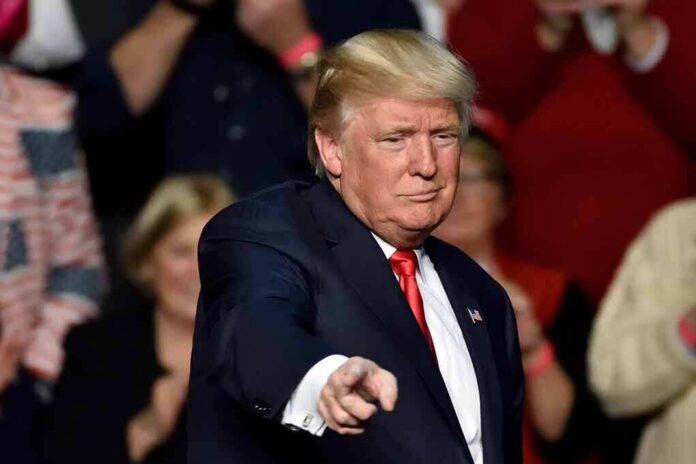
President Trump confirmed the United States agreed to continue talks after Iran requested them, while insisting any deal will block Tehran from ever getting a nuclear weapon.
Story Highlights
- Trump said Iran asked to keep talking, and the U.S. agreed to engage on U.S. terms.
- The signed memorandum of understanding set a path to end hostilities and reopen Hormuz.
- Critics say the framework gives Iran early economic relief before hard nuclear steps.
- The White House says the approach keeps America safe and denies Iran a bomb.
Trump Signals Conditional Openness To Talks With Iran
President Trump said Iran asked to continue negotiations, and he agreed to keep talking while keeping U.S. red lines firm. He stressed that any agreement must prevent Iran from getting a nuclear weapon and protect American interests. The message blends pressure with a door to diplomacy. Reuters reported his post stating, “The Islamic Republic of Iran has asked us to continue ‘talks.’ We have agreed to do so.” That posture keeps leverage while testing whether Tehran will move.
Trump previously told reporters that Iran “wants to make a deal,” but he would not sign anything that lets Tehran have a nuclear weapon. That position sets the core U.S. condition up front and matches his “peace through strength” theme. It also centers the talks on the nuclear file and security, rather than on side issues. The public line is simple: engage if it helps America, stop if it risks a bomb in Iranian hands. Reuters captured this stance in April.
The Memorandum Of Understanding And Maritime Security
The United States and Iran signed a memorandum of understanding that lays out steps to end the war and stabilize shipping. The text shows a mediated framework, including a pathway to reopen the Strait of Hormuz to commercial traffic, which is vital to energy markets and family budgets across America. The framework sets a defined period for follow-on talks to lock in nuclear and regional terms. NPR posted the full text of the signed memorandum, confirming the scope and signatories.
Reporters also detailed how the initial terms aimed to reopen the waterway and calm cross-border fire while negotiations continued. That approach sought to lower risks for U.S. forces and allies and to cut shockwaves in global oil prices. The structure uses time-bound steps to test compliance and build pressure for further concessions. Critics say it banks near-term stability while postponing the toughest nuclear measures for later rounds, which they argue invites backsliding.
Debate On Sanctions Relief, Leverage, And Sequence
Supporters inside the administration say the framework follows an America First model: no nuclear weapon for Iran, safer seas, and leverage kept through staged incentives. The White House stated the agreement ensures Iran will never obtain a nuclear weapon and restores free navigation in Hormuz under American leadership. That message frames the deal as strength backed by conditions and verification, not trust. The release credited President Trump and Vice President JD Vance for securing the breakthrough.
Opponents, including some Republicans, warn that early economic steps risk rewarding Tehran without firm nuclear rollbacks. Reuters summarized the critique this way: Iran gets benefits now, while the United States only keeps what it already had—an open strait and a promise not to pursue a bomb. They want tougher up-front demands, including reductions of enriched uranium and limits on Iran’s missile work and proxies. They argue sequencing matters, and relief should come last, not first.
What Conservatives Should Watch Next
Conservative readers should track three things: nuclear guarantees, maritime security, and enforcement. Hard caps on enrichment and intrusive inspections matter more than speeches. Clear rules to keep the Strait of Hormuz open protect American wallets from price spikes at the pump. And snap-back penalties must trigger fast if Iran cheats. These are common-sense tests for any deal. If Tehran stalls, the administration can freeze relief and restore pressure to defend U.S. interests.
Trump’s stated goal lines up with core values: protect American lives, stop a hostile regime from getting a bomb, and keep trade lanes free. Engagement is a tool, not an end. Talks that lock in security gains are worth pursuing; talks that feed a threat are not. The current approach mixes engagement with leverage. The coming weeks will show whether Iran accepts real limits or plays for time. If Tehran balks, the United States must tighten the screws and stand firm.
Sources:
insiderpaper.com, aljazeera.com, npr.org, reuters.com, whitehouse.gov
© conservativefreepress.com 2026. All rights reserved.