

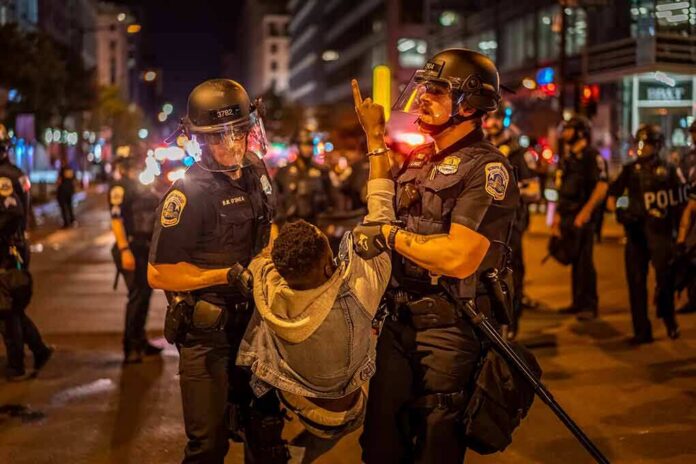
A 15-year-old was arrested after a woman’s face was burned with a makeshift flamethrower during Marseille’s student unrest, sharpening fears that street chaos is swallowing basic public safety.
Story Snapshot
- Prosecutors say a 15-year-old is in custody after a Marseille flamethrower assault.
- Video shows a hooded youth using an aerosol can and lighter on a woman’s face.
- The incident came amid wider student protests and riots across French cities.
- Scholars note youth-heavy unrest often drives tougher security politics in France.
Arrest Tied to Viral Flamethrower Assault in Marseille
The Marseille Public Prosecutor’s Office said a 15-year-old was arrested and placed in police custody after a woman was burned in the face during protests in the city. Reports describe a viral video of a hooded teen using an aerosol can and a lighter as a makeshift flamethrower during a street clash. The assault took place on the margins of high school demonstrations, which spread across multiple French cities this week.
Video-led coverage from multiple outlets shows the woman confronting masked protesters before a youth directs flames at her face at close range. The clip circulated widely and fueled public anger about rising violence near schools and transit stops. Initial accounts say the victim filed a complaint after suffering facial burns. Police and prosecutors did not immediately release the suspect’s name because he is a minor under French law.
Unrest Involving Minors Raises Policing and Safety Pressures
French protests often draw in many youths, including underage students, which makes crowd control harder and raises the risk of serious injury. Recent figures from French authorities noted large arrest numbers during student unrest, with a significant share involving minors. This pattern forces police commanders and prosecutors to balance youth protection, school access, and swift responses to crimes like arson and assaults seen around campuses and transit hubs.
Scholars of French riots say waves of youth-led disorder can spur stricter security measures and tougher sentencing debates. Past surges in violence have led to more cameras, faster court processes, and specialized anti-crime units. Officials argue these steps deter attacks and protect teachers, students, and commuters. Critics warn that reactive shifts can miss root causes and risk sweeping many nonviolent teens into the justice system.
Nationwide Turmoil Turns Local Crimes into National Flashpoints
National media and political leaders often treat striking incidents as symbols of broader decline. The Marseille attack drew intense focus because it targeted a bystander and was easy to share online. Similar cycles followed past unrest, where single clips drove arguments about law, immigration, and opportunity in working-class districts. Researchers find that these moments can shape policy more than longer reports or slower statistical trends.
15-year-old ARRESTED for burning woman’s face with flamethrower as far-left riots rage on in France https://t.co/1NsGz0baR3
— Dawn Wildman (@WildmanDawn) October 3, 2026
This case highlights a core worry shared across ideologies: when public order breaks down, ordinary people pay the price. Parents fear sending kids to schools near protests. Small shops and bus shelters become battlegrounds. Many citizens believe leaders react to headlines, not to everyday safety needs. The Marseille arrest may bring a quick courtroom answer, but it also revives a larger question: can the state protect peaceful life without waiting for the next viral blowup?
Sources:
humanevents.com, newsminimalist.com, metro.co.uk
© conservativefreepress.com 2026. All rights reserved.