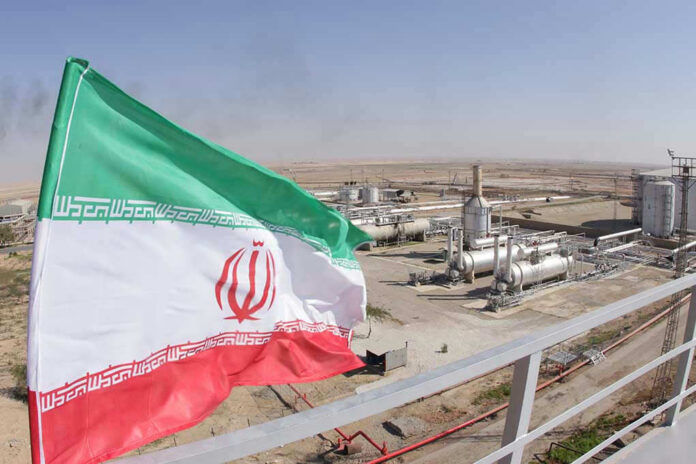
After decades of ‘Death to America’ chants, Iran’s bluff is called—no regional allies rush to its defense as U.S. and Israeli strikes expose Tehran’s total isolation.
Story Snapshot
- U.S. and Israel launched Operation Epic Fury on February 28, 2026, following failed nuclear talks, achieving air dominance and neutralizing Iran’s navy in days.
- Iran retaliated with missiles on Israel and 14 U.S. bases, but no neighbors intervened despite years of anti-American rhetoric.
- President Trump’s confrontational stance delivered regime change objectives, contrasting Biden-era weakness.
- Defense Secretary Pete Hegseth confirms U.S. bombers hit 200 targets, proving American military superiority.
Failed Nuclear Talks Ignite Strikes
Indirect U.S.-Iran nuclear negotiations collapsed after three rounds. Talks began February 6 in Muscat, Oman, continued February 20 with Trump’s 10-day deadline, and ended February 26 in Geneva with no agreement. President Trump had warned of regime change as the best outcome. U.S. military buildup included deploying USS Abraham Lincoln and USS Gerald R. Ford carrier groups. Strikes commenced February 28, coordinated with Israel, targeting Iran’s nuclear and missile capabilities. This action upholds American strength against Iranian aggression, protecting allies and global security.
After Years of “Death to America” Rhetoric — U.S. Strikes Demonstrate Iran Has No Allies https://t.co/G0EEU2NVcT
— JaneDoe (@JaneOpines) March 6, 2026
Operation Epic Fury Delivers Decisive Blows
Over 100 American aircraft struck Iranian targets March 1 at 1:15 a.m. Eastern time. B-2 bombers dropped 2,000-pound penetrator bombs on buried missile launchers. In 72 hours, U.S. forces hit nearly 200 sites, rendering Iran’s navy combat-ineffective and destroying air defenses. A major Iranian drone carrier burned after U.S. hits. General Dan Caine coordinated multi-service operations, establishing total air dominance. Naval presence grew to over 30 ships. These victories demonstrate Trump’s resolve restores deterrence eroded by past weak policies.
Iran Retaliates Alone, Allies Absent
Iran fired 35 Emad and Ghadr missiles at Israel by 5:42 a.m. ET March 1 and targeted 14 U.S. bases in Bahrain, UAE, Kuwait, Jordan, and Saudi Arabia. Major General Ali Abdollahi vowed continued attacks until U.S. and Israel defeat. Yet no regional powers intervened militarily. Qatar warned of escalation risks but stayed neutral. This isolation shatters Iran’s ‘Death to America’ facade and regional dominance claims. Neighbors prioritize U.S. security umbrella over Tehran’s empty threats, validating conservative warnings on appeasement failures.
Defense Secretary Pete Hegseth affirmed U.S. resources sustain the campaign, countering Iran’s miscalculations. B-2 strikes degraded Iran’s Space Command equivalent, curbing threats to Americans.
Regime Change Goals and Long-Term Shift
Operation Epic Fury pursues regime change alongside dismantling Iran’s missile industrial base. Institute for the Study of War notes explicit aims to topple the Islamic Republic. Short-term gains include neutralized launchers and ineffective retaliation. Long-term, this prevents reconstruction, shifts Middle East power toward U.S. allies. Global energy markets face risks from instability, but Iran’s isolation limits escalation. Trump’s strategy revives American credibility, rejecting globalist deals like the JCPOA that empowered Tehran.
Sources:
Wikipedia: Prelude to the 2026 Iran conflict
Global News: Iran War Timeline – What You Need to Know