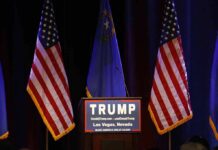
A university that closes its doors to hold them open for one specific gathering is making a statement about what it believes a campus is for — and on September 10, Utah Valley University made that statement in the starkest possible terms, shutting down an entire academic day so that Turning Point USA could fill its arena with mourners a year after Charlie Kirk was shot to death on that same ground.
Key Points
- UVU canceled all classes and closed campus operations on September 10, the one-year anniversary of Charlie Kirk’s killing, explicitly to allow “reflection, service and connection.”
- The UCCU Center, UVU’s on-campus arena, remained open specifically for Turning Point USA’s privately organized memorial, “Freedom Built to Last Honoring Charlie Kirk.”
- Security was visibly heightened, with preregistration required, doors opening well ahead of the 6:30 p.m. program, and an increased police presence campus-wide.
- A student-led counter-protest, backed by a letter with more than 600 signatures, argued the memorial conflicted with the university’s stated commitment to care for a divided campus.
- The observance sits inside a decades-long pattern in American higher education, where campuses that become sites of political violence must choose between memorialization, neutrality, and institutional risk management — often satisfying none of them completely.
What UVU Actually Did on the Anniversary
The facts here are not in dispute. UVU told students and staff by email that the university “would be closed that day to provide time and space for reflection, service and connection,” and that classes would be canceled and campus shut down on Thursday, September 10. Interim President Wayne Vaught reiterated the framing publicly, calling the day one meant “to foster healing for our community following the assassination of Charlie Kirk”. That is an unusual administrative move — universities rarely suspend an entire day of instruction for a single anniversary — and it signals how directly UVU’s leadership tied the closure to the killing itself rather than treating September 10 as an ordinary day on the academic calendar.
Even as the broader campus went dark, one building did not. UVU confirmed that “the UCCU Center will remain open for a privately organized event,” specifying that Turning Point USA had engaged the university to use the arena that evening. That distinction — closed campus, open arena — is the operational core of the story. The university did not organize the memorial itself; it created the conditions, through closure and security planning, for an outside organization to hold one on university property.
Inside the UCCU Center: A Memorial with the Trappings of a Major Event
Turning Point USA billed the evening as “Freedom Built to Last Honoring Charlie Kirk,” scheduled for 6:30 p.m. at the UCCU Center, with doors opening at 4 p.m. and preregistration required for entry. Reporters and attendees described a faith-inflected program, with speakers including Turning Point USA leadership, commentator Glenn Beck, and a faith leader, reflecting the religious dimension Kirk himself had woven into his political brand. Attendees, many wearing “freedom shirts,” described the event less as a political rally than as a communal reckoning — several students told local reporters that Kirk’s death had pushed them to get more involved in campus political and religious life, treating his killing as a catalyst rather than merely a tragedy.
UVU paired the open-arena, closed-campus arrangement with a visible security posture: police and sheriff’s deputies stationed around the grounds, an announced “increased security presence on campus,” and a preregistration requirement functioning as an informal screening mechanism. That combination — heavy security plus controlled access — is standard practice for any large single-venue gathering tied to a high-profile killing, and it reflects UVU’s dual obligation to allow public mourning while managing the risk that a politically charged assembly, on the exact site of an assassination, can carry.
A Campus Still Split, One Year Later
Not everyone on campus welcomed the arrangement. A letter signed by more than 600 people argued the memorial did not align with the university’s stated commitment to caring for its community, and UVU’s own student Democratic club announced plans to demonstrate near the event. Reporting from the day itself described the crowd as largely supportive — dominated by mourners rather than protesters — but the presence of an organized counter-protest, and the scale of the signed opposition, indicates the anniversary did not produce unanimous sentiment even as the university sought a unifying tone. That tension is worth naming plainly rather than smoothing over: UVU’s chosen framing of healing and reflection was contested by a meaningful slice of its own student body, who saw the arrangement less as neutral commemoration and more as institutional favor extended to one political organization’s messaging.
That ambiguity is structurally built into the arrangement itself. Because Turning Point USA organized and ran the memorial as a private event, while UVU supplied the closure, the venue, and the security shell around it, the university occupies an uncomfortable middle position — facilitator, not sponsor, yet inseparably associated with the outcome in the public eye. Whether that reads as prudent neutrality or as tacit endorsement depends heavily on who is asked, and the letter-writers and the arena crowd plainly answered that question differently.
Why This Pattern Recurs on American Campuses
UVU’s predicament is not new, even if the particulars are. Scholars who study campus memorialization after politically charged deaths — from the University of Texas tower shooting in 1966 through Kent State to more recent tragedies — have long observed that administrators tend to frame their choices around a narrow set of questions: what the honoree’s legacy principally represents, who the commemoration centers, and whether present institutional values should govern how the dead are remembered. Those disputes rarely resolve cleanly, because a memorial on contested ground almost always becomes, whether intended or not, a referendum on the institution’s own identity rather than a purely private act of grief. UVU’s closure, its arena arrangement, and the counter-protest it drew all fit that template precisely: a university trying to hold space for mourning while a portion of its community reads the same gesture as a political statement it never agreed to make.
What the Anniversary Signals Going Forward
The precedent UVU set — full closure paired with a sanctioned private memorial inside its own arena — will likely inform how other institutions handle future anniversaries tied to campus tragedy, whether political or otherwise. It offers a template that satisfies neither total detachment nor full institutional ownership, instead threading a narrow operational path: shut down normal function, hand the microphone to an outside organizer, and let heightened security stand in for a policy on what the day is supposed to mean. Whether that template produces healing or simply defers the underlying disagreement to the next anniversary is a question UVU’s own community, split as it visibly remains, has not yet answered.
🇺🇸 Utah Gov. Spencer Cox has declared Sept. 10 “Charlie Kirk Day,” marking 1 year since Kirk was assassinated at Utah Valley University.
Cox said the day honors Kirk’s commitment to open debate and political engagement. pic.twitter.com/KLhKS8HQJq
— NewsForce (@Newsforce) September 11, 2026
Sources:
youtube.com, deseret.com, heraldextra.com, upi.com, abc4.com, nfpevents.tpusa.com
© conservativefreepress.com 2026. All rights reserved.